

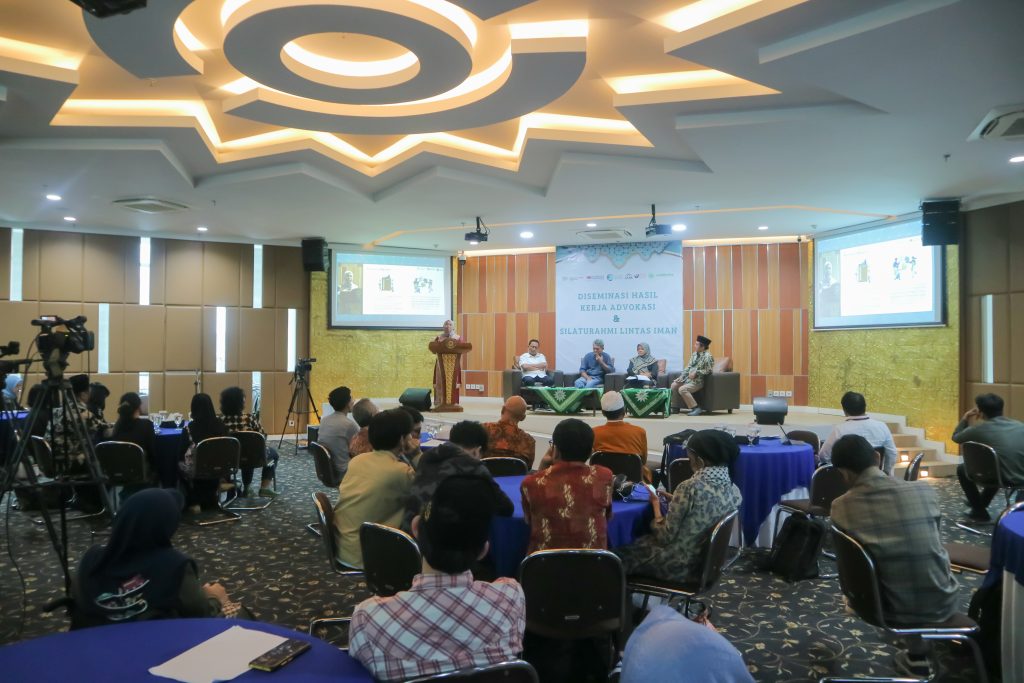
Description: Dissemination of Results from Interfaith Advocacy for Managing Environmental Risks, Interfaith Meeting, and Iftar Together, held at the Muhammadiyah Da’wah Center Building, Central Jakarta, March 20, 2025.
Jakarta, March 20, 2025 – Eco Bhinneka Muhammadiyah, together with GreenFaith Indonesia and supported by the UK Government through the Foreign, Commonwealth, and Development Office (FCDO), has successfully organized an event to disseminate the results of advocacy work and interfaith networking in Jakarta. The event aimed to strengthen the role of religion and beliefs in climate change mitigation efforts and to build interfaith collaboration toward a greener and more sustainable Indonesia.
Held at the Central Board of Muhammadiyah Office in Jakarta on Thursday, March 20, 2025, the event was attended by various religious leaders, environmental figures, representatives from embassies of friendly countries, interfaith organizations, youth leaders, and people with disabilities. Their presence underscored the shared commitment to facing the increasingly threatening climate crisis.
In his online address, Ari F. Adipratomo, Low Carbon Policy and Programme Advisor from the British Embassy Jakarta, expressed appreciation for this initiative.
Prof. Syafiq A. Mughni, MA, Chairman of the Central Board of Muhammadiyah, in his opening remarks, emphasized the importance of reforming religious thought to be more environmentally conscious. “Environmental issues and the climate crisis are major concerns for Muhammadiyah. We need to understand religion comprehensively, not only in terms of our relationship with God but also in our relationship with nature. This is our responsibility as stewards of the Earth,” he stressed.
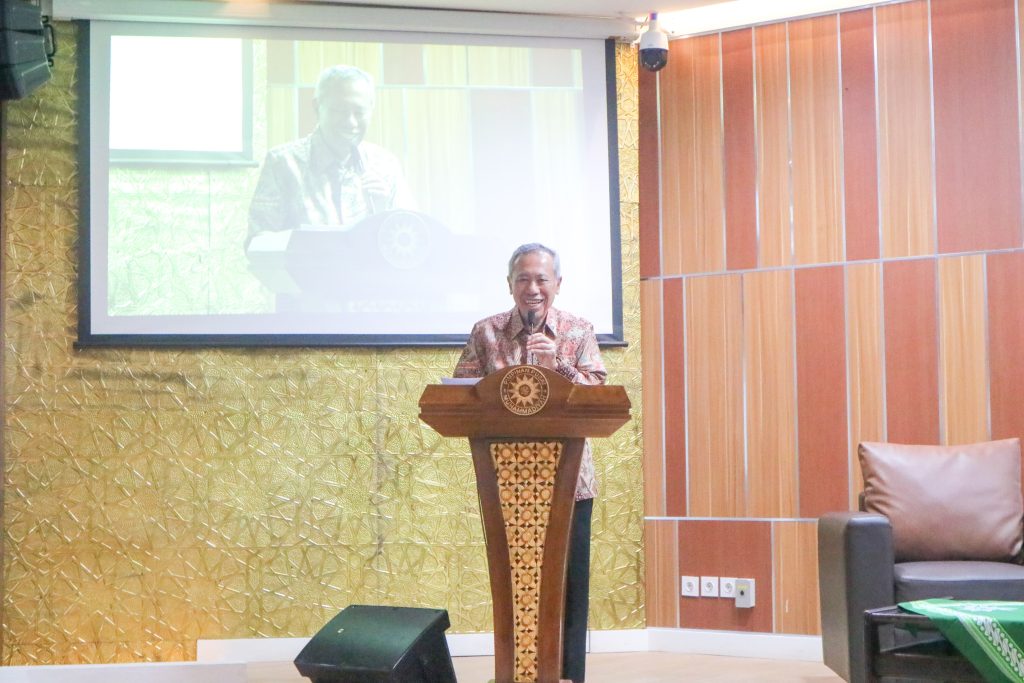
Description: Prof. Syafiq A Mughni, MA, Chairman of the Central Board of Muhammadiyah, emphasized the importance of reforming religious thought that is pro-environment.
Syafiq also criticized the widespread wasteful practices, especially during Ramadan, where food waste increases by up to 20%. “This shows that we have not yet established a good relationship with the environment. We need to revive the spirit of green Ramadan and change our lifestyles to be more environmentally friendly,” he added.
Results of Advocacy Work and Progressive Recommendations
Hening Parlan, Director of Eco Bhinneka Muhammadiyah, presented the results of advocacy work conducted from January to March 2025. “We have completed a series of advocacy efforts in Jakarta, Sawahlunto (West Sumatra), Pekanbaru (Riau), Ambon (Maluku), and through online platforms. Through this work, we want to see how interfaith and belief-based engagement can contribute to climate change mitigation,” she explained.
Hening explained that religion plays a central role in driving collective awareness to care for the environment. “Religion serves as a moral guardian in preserving, managing, and honoring the environment with responsibility, concern, justice, and sustainability. These values are drawn from verses in holy scriptures,” she said.
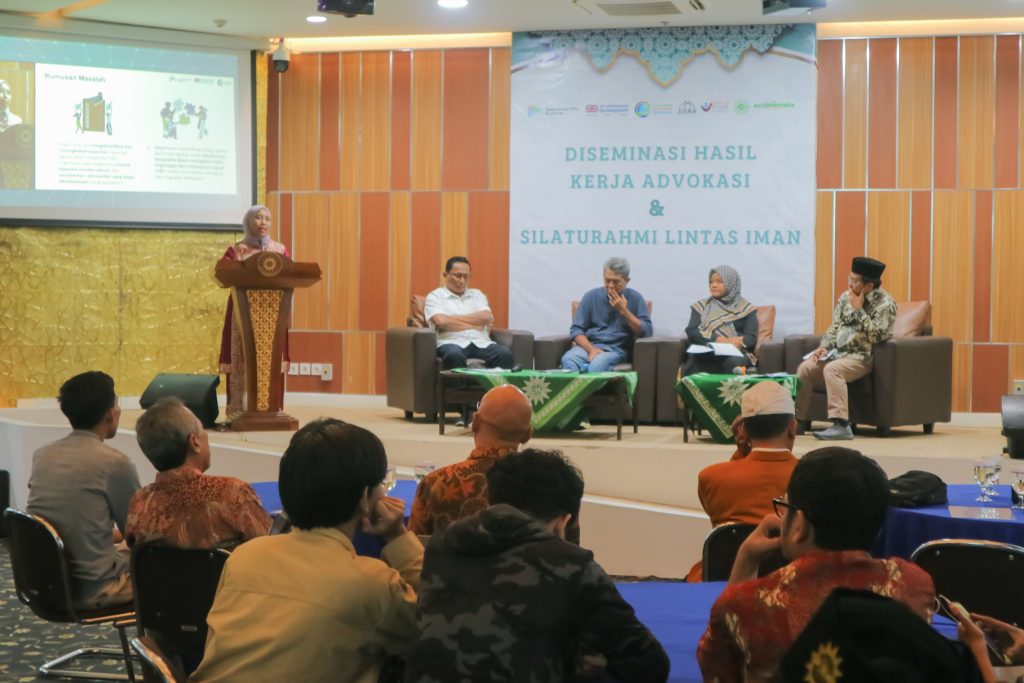
Description: Hening Parlan, Director of Eco Bhinneka Muhammadiyah, presented the results of interfaith advocacy work to manage environmental risks.
The results of this advocacy work have led to several environmental policy recommendations for the Central Government, Local Governments, Religious Organization Institutions, and Interfaith Coalitions, including: evaluating policies that perpetuate environmental degradation, strengthening environmentally oriented policies and regulations, enhancing support and funding for environmental programs, improving intersectoral collaboration and coordination, recognizing and integrating interfaith networks, enhancing capacity and policy advocacy, and communication strategies to support vulnerable groups.
Inspirational Stories from Religious Leaders, Indigenous Figures, and Disability Groups
Pastor Jhon Victor Kainama, Head of the Environmental and Disaster Bureau of the Maluku Protestant Church (GPM) Ambon, who attended the event, shared experiences about the church’s struggle alongside the community against mining exploitation in NTT.
“We at GPM feel that we must engage in environmental activism because it is part of our faith and morality. We don’t want to just be speaking from the pulpit,” he said.
Pastor Jhon explained that GPM’s work extends beyond Maluku Province, all the way to North Maluku. These two provinces are often referred to as the Maluku Islands. “We advocate for the small island regions threatened by extractive industries, particularly nickel mining,” he emphasized.
Meanwhile, Putu Ardana, an indigenous leader from the Dalem Tamblingan Indigenous Community in Bali, recounted the community’s efforts to protect their sacred forest from investor expansion. “Our ancestors decided that the forest and lake are our primary sources of life that must not be tampered with. This message is written in lontar and passed down through generations,” he said.
He continued that he and the Dalem Tamblingan indigenous community are ready to defend their sacred forest from various threats. For him, the wealth of the forest cannot be converted cheaply for short-term interests because the forest is a source of water, biodiversity, and medicine. “Furthermore, the forest holds deep spiritual significance,” he stressed.
Indah Purwanti Mugianti, Principal of the Tia Special Needs School (SLB) in Sawahlunto, expressed appreciation for the inclusion of disability groups in this event. “For a long time, people with disabilities have never been involved in development, let alone in climate change mitigation. Yet, we are the most vulnerable group impacted by the climate crisis and environmental degradation,” she said. Indah gave an example of how people with hearing disabilities cannot hear disaster warnings and thus require an inclusive system.
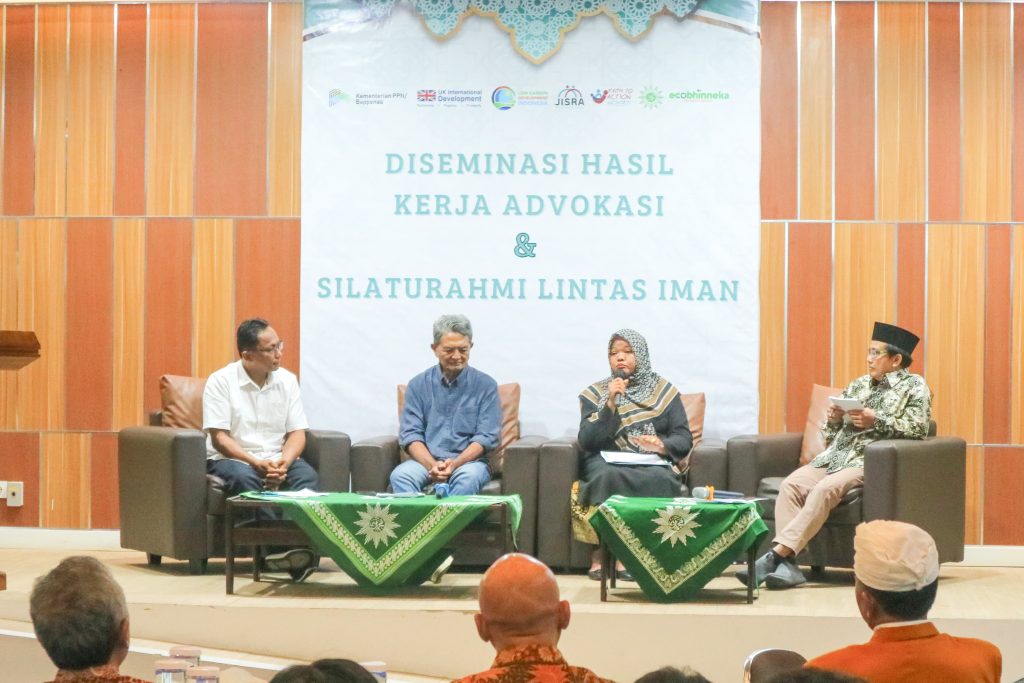
Description: A response session from representatives of religious figures, indigenous communities, and disability group advocates.
Religion as a Moral Resource for Real Change
This event reaffirmed that religion is not just a ritual but a moral resource that can drive real change. With interfaith solidarity, inclusivity, and policies that favor the marginalized, Indonesia has great potential to become a global example of low-carbon development. As the Javanese proverb says, “Memayu hayuning bawana”—preserving the beauty of the world. This is the time for religion to be an active hand, not just a mouth that prays.
Interfaith and belief-based collaboration has proven that spiritual values can become a transformative force in addressing the climate crisis. With the spirit of mutual cooperation, Indonesia can realize a greener and more sustainable future for generations to come.
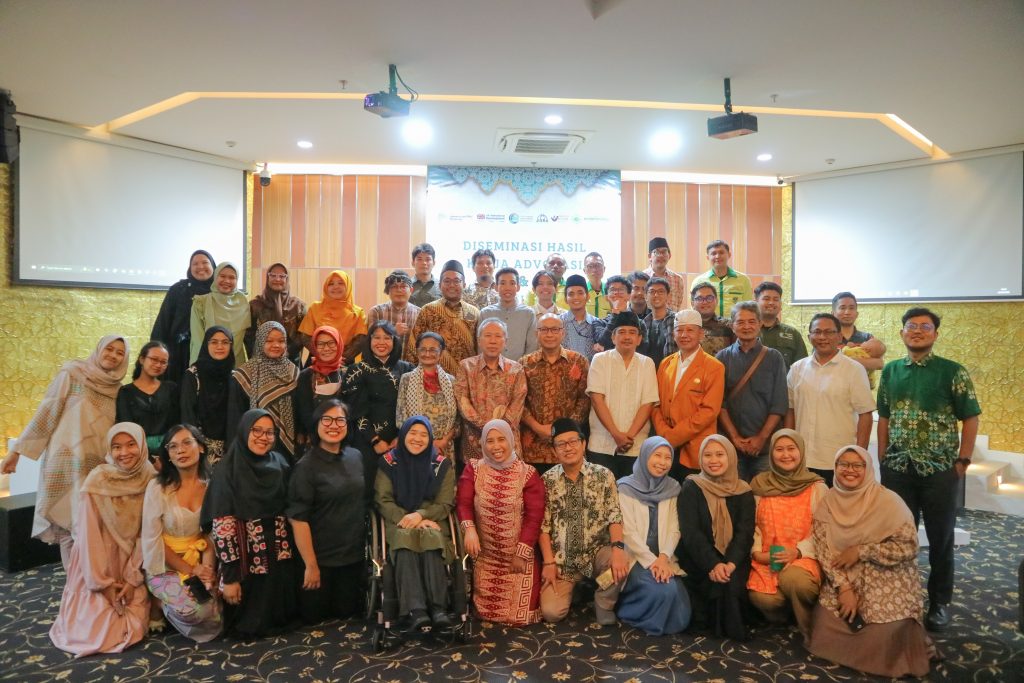
Description: A group photo of participants in the Dissemination of Results from Interfaith Advocacy for Managing Environmental Risks, Interfaith Meeting, and Iftar Together, held at the Muhammadiyah Da’wah Center Building, Central Jakarta, March 20, 2025.
==
About Eco Bhinneka Muhammadiyah
Muhammadiyah initiated Eco Bhinneka to promote interfaith harmony in Indonesia through an environmental approach. In 2025, Eco Bhinneka Muhammadiyah and Oxford Policy Management Limited (OPML) carried out consultations on advocacy work in religious and interfaith engagement for mitigating and managing environmental risks in Sawahlunto (West Sumatra), Pekanbaru (Riau), and Ambon (Maluku). This activity aims to strengthen the role of religion and interfaith cooperation in managing environmental risks and climate change. Eco Bhinneka Muhammadiyah collaborates with GreenFaith Indonesia in implementing this program.
About LCDI
Low Carbon Development Indonesia (LCDI) is a development platform aimed at sustaining economic and social growth through activities that produce low Greenhouse Gas (GHG) emissions while minimizing the exploitation of natural resources. This program promotes sustainable development that maintains a balance between economic needs, social equity, and environmental sustainability.
About GreenFaith Indonesia
GreenFaith is a cross-faith organization based in New York since 1992 and has since expanded to 11 countries. GreenFaith is a movement promoting interfaith cooperation to reduce the impacts of climate change. In Indonesia, GreenFaith has been active since 2023, focusing on Faith for Climate Action—real actions from individuals across faiths to address climate change impacts, interfaith training for climate justice, and building cross-faith perspectives in the energy transition. Updates on GreenFaith Indonesia’s activities can be followed on Instagram @greenfaith.id.*
